EHR for TRT and hormone clinics.Care, inventory, and memberships together.
Run the patient relationship and the practice in Moonshot. Chart visits, manage medication stock, coordinate follow-ups, and handle recurring billing in one platform built for cash-pay hormone clinics.
TRT care continues between appointments. Your team is managing inquiries, intake, clinical visits, medication work, follow-ups, and membership payments throughout the relationship. Moonshot brings those responsibilities into one EHR and practice-management platform.
The front desk can follow a new inquiry into patient care, clinicians can work with the patient’s chart, and staff can manage stock and billing in the same system. You have fewer separate tools to maintain and a clearer place for each part of the work.
Inside Moonshot
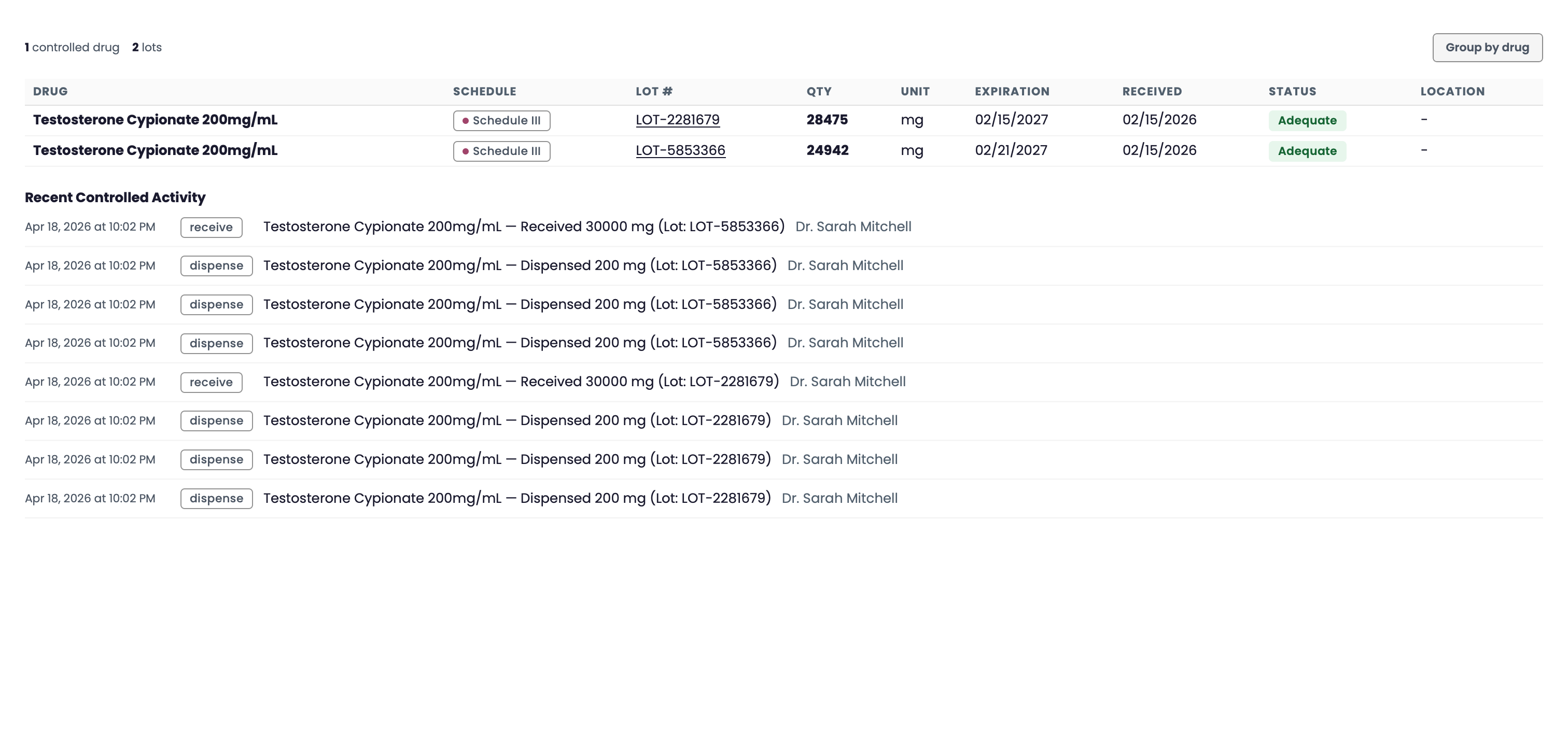
Know what is on the shelf and what happened to it.
Lot balances and recent activity share one view. Expand the full-size view to inspect the inventory workflow.
Inspect screenshot at full size
The connected workflow
From first inquiry to the next follow-up.
See how a new inquiry becomes an ongoing patient relationship.
01
Capture the inquiry
Keep the lead’s source, owner, and conversation in the CRM.
02
Prepare the visit
Book the appointment and request the forms assigned to that visit type.
03
Document the care
Review the chart and record the encounter. Use the appropriate inventory workflow for stock administered or dispensed.
04
Continue the relationship
Manage memberships, book follow-ups, and keep outstanding work visible to the team.
What changes for your team
Put the recurring work in one place.
The value is in connecting the tasks your team handles every day.
Common workflow friction, the Moonshot capability, and the benefit to your team
The team has a shared place to work on plans and payments.
Connected clinical operations
Clinical context and stock history, close at hand.
Use charting for the care delivered and inventory for the stock used. Your team can work across both in Moonshot, with clear records of the patient encounter and the medication lot. Pharmacy prescriptions remain distinct from stock dispensed by your clinic.
Use the patient chart for clinical decisions and documentation.
Use inventory records to identify the lot, quantity, and stock movement.
Review the specific prescribing and inventory setup for your clinic during the demo.
Make an informed switch
Check the fit. Then plan the move.
Built for cash-pay hormone practices that want clinical and operational work in one workspace. If insurance claims processing is central to your practice, make that a specific fit check before switching.
Pricing and onboarding
Medical · $1,000 / location / month
One prescriber included. Additional prescribers $200/month. Unlimited supporting staff.
No Moonshot platform transaction fee. Optional hands-on migration starts at $1,000, quoted by scope. Support during regular business hours.
We’ll walk through a new patient, a follow-up visit, medication inventory, and membership billing. Tell us where your current setup creates extra work, and we’ll show you the relevant workflow.
We’ll also cover integrations, data transfer, and onboarding so you can understand the switch before deciding.
What should I look for in an EHR for a TRT clinic?
Look beyond note templates. Compare intake, follow-up scheduling, medication and lot tracking, recurring billing, prescribing setup, and the handoff from lead to patient. Ask each vendor to demonstrate your actual workflow, including exceptions such as an incomplete form or an inventory discrepancy.
Can Moonshot track testosterone inventory by lot?
Yes. Inventory tracks drug lots, quantities with their units, expiration dates, and activity such as receipt and dispensing. The demo above shows testosterone cypionate tracked in mg. Your clinic remains responsible for its controlled-substance procedures and recordkeeping obligations.
Does a prescription automatically deduct clinic stock?
Prescribing and inventory are distinct workflows. Medication sent to a pharmacy is not necessarily medication dispensed from clinic stock. Review the supported administration and dispensing paths with your team rather than treating every prescription as an inventory deduction.
Can intake forms depend on the appointment type?
Yes. Assign forms to appointment types in Forms & Intake. Booking starts the assigned form request. A re-send-every-booking option supports recurring intake when you need patients to complete a form again.
Can I run telehealth and in-person visits together?
Moonshot includes scheduling and telehealth alongside the patient chart. Configure the visit types your clinic uses and demonstrate both paths during onboarding. Your clinicians determine the appropriate visit modality and clinical requirements.
How much does Moonshot cost for a solo TRT clinic?
Medical is $1,000 per location per month with one prescriber included. Additional prescribers are $200 per month; supporting staff are unlimited. There is no Moonshot platform transaction fee. Payment-processor charges are separate.
Can you help migrate from our current EHR?
Optional hands-on migration starts at $1,000 and is quoted by scope. Before switching, identify the records, documents, active plans, and open work you need to bring over. Confirm the transfer scope and a sample of the imported records before choosing your go-live date.
What support is included?
Support is available during regular business hours. During onboarding, we’ll discuss staff training, how to get help, and the support needs of your practice.
See the complete workflow
See your TRT practice in Moonshot.
We’ll walk through a new patient, a follow-up visit, medication inventory, and membership billing. Tell us where your current setup creates extra work, and we’ll show you the relevant workflow.