GLP-1 clinic software.Keep care and clinic operations together.
Manage intake, visits, refill review, patient communication, and memberships in one EHR. Moonshot helps cash-pay weight loss teams organize the work that continues between appointments.
A GLP-1 practice is an ongoing care program. New inquiries become consultations; consultations lead to follow-ups, medication reviews, patient questions, and recurring payments. Moonshot connects the clinical and business sides of that relationship.
Your team can manage the patient journey in one platform, from the first inquiry through ongoing care. Clinicians have the chart, the front desk can coordinate visits and follow-up, and management can handle memberships and billing without maintaining a separate system for each job.
Inside Moonshot
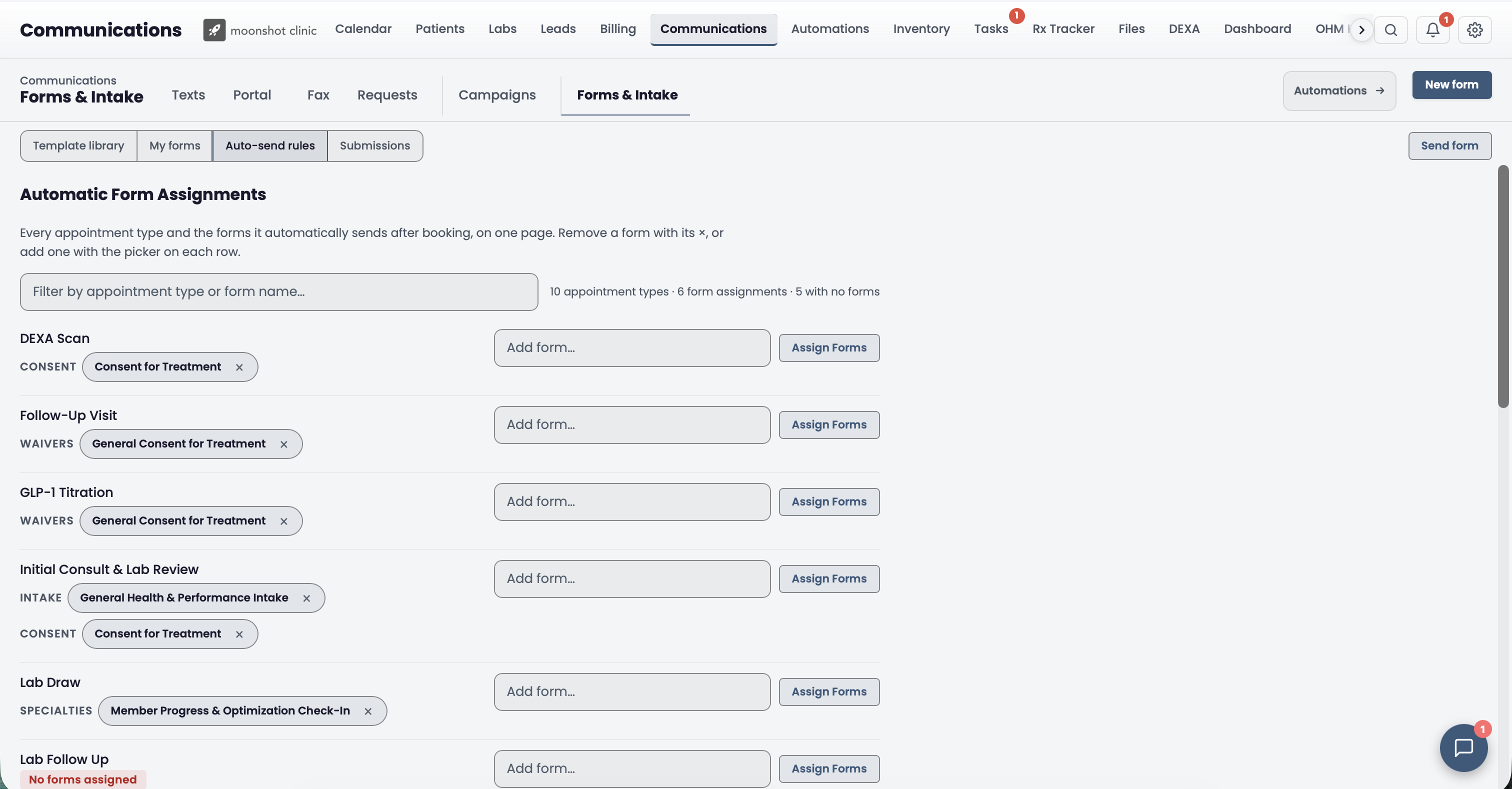
Different visits. Different forms. One set of rules.
Assign the intake or consent forms that belong with each appointment type. Booking starts the configured request.
Inspect screenshot at full size
The connected workflow
A repeatable check-in workflow.
A practical view of the work before, during, and after a follow-up visit.
01
Prepare
Assign your clinic’s intake or check-in form to the appointment type.
02
Review
Use the visit to review the patient’s history, responses, and clinical context.
03
Decide
Review medication and refill work. The clinician decides whether treatment changes are appropriate.
04
Follow through
Arrange the next appointment and handle ongoing messages, tasks, and membership billing.
What changes for your team
Less coordination between separate systems.
Keep check-ins, medication work, visits, and billing close to the patient relationship.
Common workflow friction, the Moonshot capability, and the benefit to your team
See the day’s visits with patient, provider, type, and status together.
Beyond the appointment
Keep the follow-up work moving.
The visit is one part of an ongoing relationship. Bring check-in forms, refill review, messages, and the next appointment into a repeatable team workflow. Clinicians make the treatment decisions; staff can see and act on the operational next steps.
Build check-in questions around your clinic’s workflow.
Use refill review to inspect patient, drug, strength, and destination.
Keep follow-up scheduling separate from decisions about eligibility or dose changes.
Make an informed switch
Check the fit. Then plan the move.
Designed for cash-pay medical weight loss practices with ongoing visits and memberships. Discuss pharmacy connections, prescribing requirements, and any insurance workflows before deciding whether Moonshot is the right fit.
Pricing and onboarding
Medical · $1,000 / location / month
One prescriber included. Additional prescribers $200/month. Unlimited supporting staff.
No Moonshot platform transaction fee. Optional hands-on migration starts at $1,000, quoted by scope. Support during regular business hours.
We’ll show you intake, a follow-up visit, refill review, and membership billing. Tell us how your team works today so the demo focuses on the parts that matter to your clinic.
We’ll also cover integrations, data transfer, and onboarding so you can understand the switch before deciding.
A useful evaluation covers scheduling, intake, charting, prescribing and refill review, patient communication, and recurring billing. Check how those parts work together, not just whether each appears on a feature list. Pharmacy setup and clinical workflows also need to match your practice.
Who controls medication changes?
Medication changes remain clinician decisions. Moonshot helps your team collect check-in information and review medication and refill work within the patient workflow.
Can we send a different form for consultations and follow-ups?
Yes. Forms can be assigned to appointment types. Your consultation can request one set of forms and your follow-up another. Enable re-send every booking when a form needs to be completed again for recurring visits.
Can the team manage refills in the platform?
Moonshot includes medication and refill tracking, with review of patient, medication, and destination in the relevant workflow. Confirm the prescribing service, pharmacy connection, and delivery method your clinic needs during the walkthrough.
Can we combine memberships with follow-up visits?
Yes. Moonshot includes recurring billing and scheduling in the same platform. Define what your membership includes and how your team books follow-ups; clinical decisions remain with the treating clinician.
Will adding more patients increase the software price?
Medical is $1,000 per location per month with one prescriber included. Additional prescribers are $200 per month; supporting staff are unlimited. There is no Moonshot platform transaction fee. Payment-processor charges are separate. Pricing is based on location and prescribers, rather than a per-patient software fee.
How do we switch from our current software?
Optional hands-on migration starts at $1,000 and is quoted by scope. Before switching, identify the records, documents, active plans, and open work you need to bring over. Confirm the transfer scope and a sample of the imported records before choosing your go-live date.
Can we use Moonshot for telehealth and in-person visits?
Yes. Moonshot includes scheduling and telehealth alongside the patient chart. Your team can manage both visit types in the platform, with clinicians deciding the appropriate care and visit modality.
See the complete workflow
See how your weight loss program would run.
We’ll show you intake, a follow-up visit, refill review, and membership billing. Tell us how your team works today so the demo focuses on the parts that matter to your clinic.